Every Solaniv formulation passes through a structured sequence: research review, ingredient selection with sourcing documentation, batch production under food-grade processing conditions, and independent laboratory verification before any product enters the finished goods inventory. This page accounts for each stage.
The methodology is not proprietary. It reflects standard food-supplement industry practice applied with a degree of rigour that Solaniv considers non-negotiable — not because it is legally required in every instance, but because it is what allows the brand to describe its products accurately.
01
The Formulation Process
Five stages from research note to verified batch
01
Research Review
Stage 01 — Initiation
Each new formulation begins with a structured review of published nutritional research relevant to men's wellbeing at an active lifestyle level. The review panel draws on nutritional survey data, ingredient composition studies, and documented micronutrient shortfall patterns in the target demographic.
The output is a research note — an internal document that records the nutritional rationale for each proposed ingredient, the evidence base supporting its inclusion, and any relevant compositional constraints. No ingredient enters a proposed formulation without a corresponding research note entry.
02
Supplier Qualification
Stage 02 — Sourcing
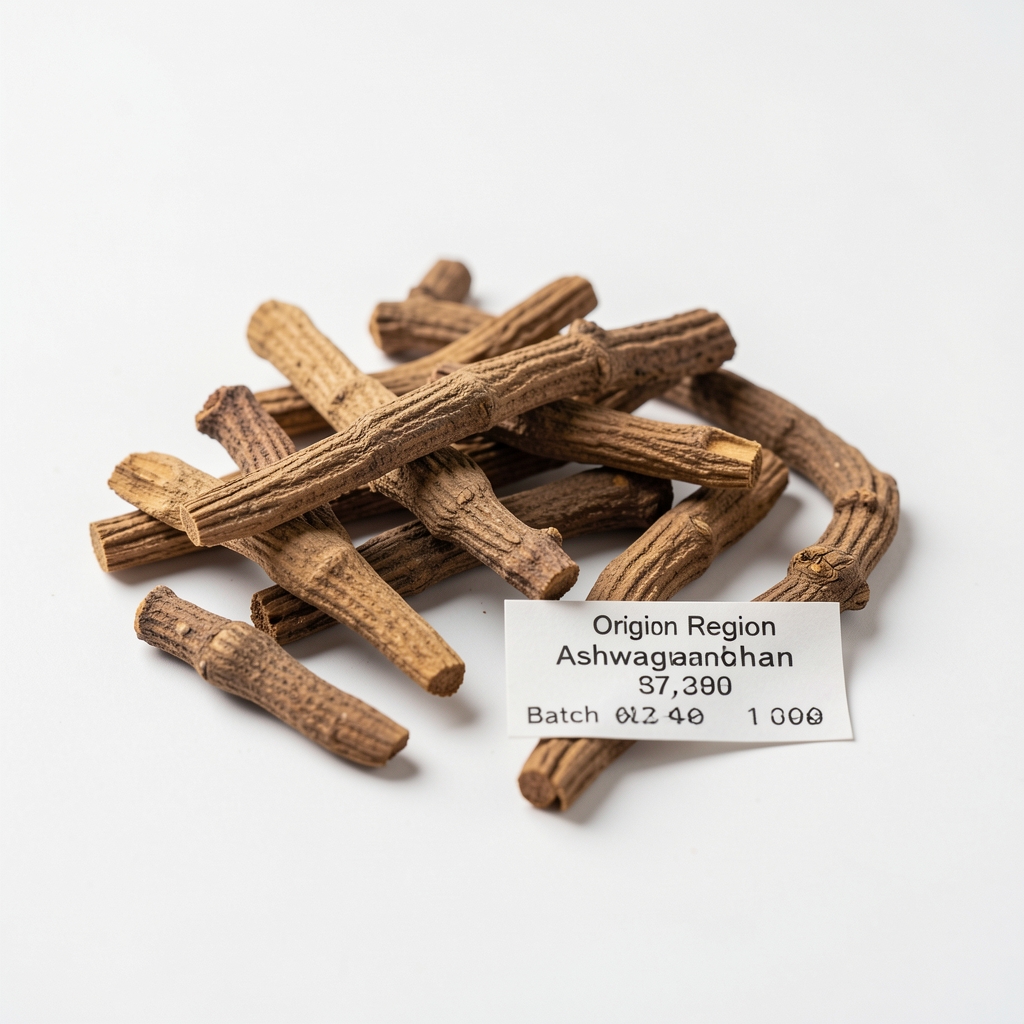
Once ingredients are determined, the sourcing process identifies suppliers capable of providing the required material with documentation. The qualification review covers chain-of-custody records from cultivation or extraction site through to the point of provision, country of origin certification, and compositional certificates for the specific lot offered.
Suppliers are assessed against a standard documentation set before entering the approved roster. The review is not accelerated by cost or timeline considerations. A supplier who cannot provide the required documentation is not used, regardless of price advantage.
03
Formulation Calibration
Stage 03 — Composition
The ingredient ratio is set at formulation stage with reference to EU nutritional reference values where available, and published compositional research where NRVs are not applicable. The daily measure is defined as a single serving — either a counted capsule quantity or a measured volume — with the per-serving composition published accurately on the label.
Ingredient concentrations are not inflated for label-marketing purposes. The formulation record includes the rationale for each concentration decision and the reference source consulted. This record is retained as part of the product archive.
04
Batch Production
Stage 04 — Manufacturing
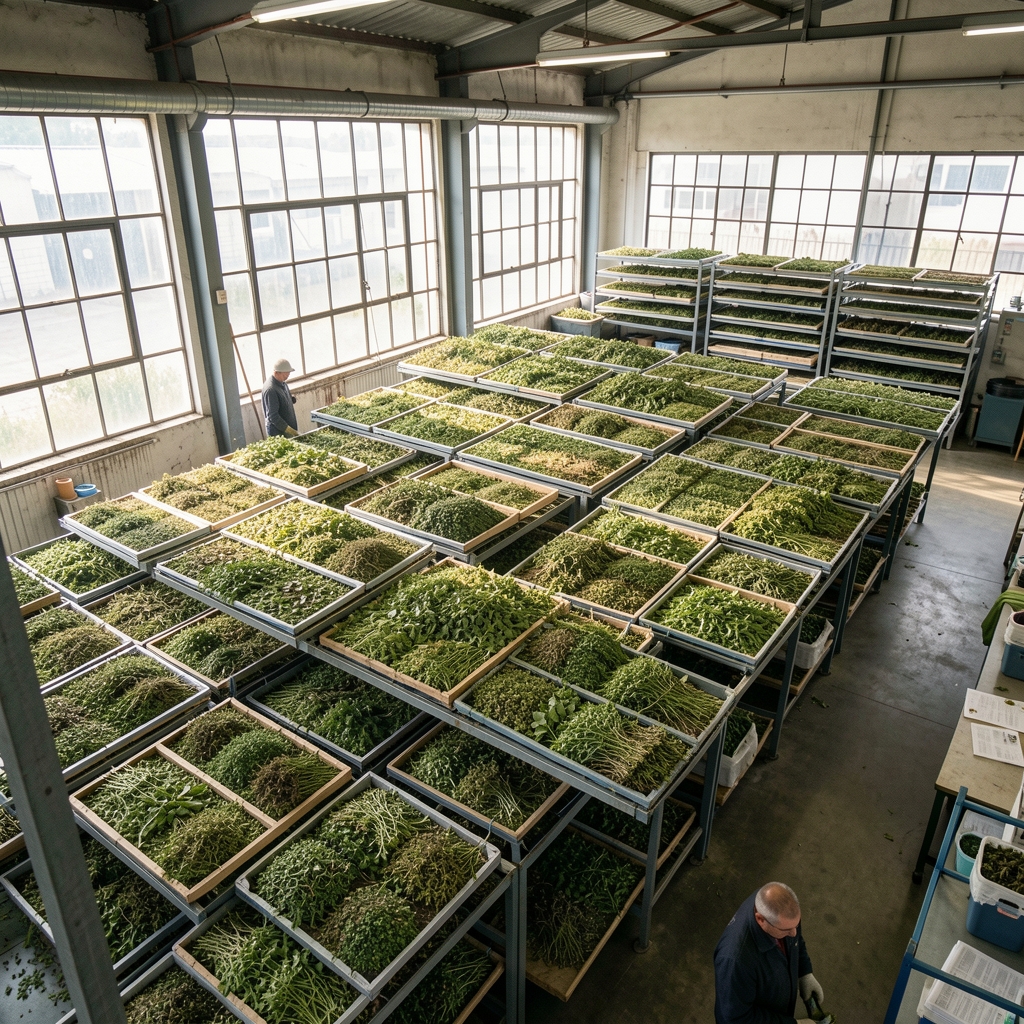
Production takes place at a contracted facility operating under food-grade processing standards. Each production run is assigned a unique batch code at the point of initiation. The batch record documents the lot numbers of incoming ingredients used, the production date, the batch size, and the production operator.
In-process checks are conducted at defined intervals. Finished units are held in quarantine until the batch verification stage is complete — no product moves to finished goods inventory before independent verification results are received and reviewed.
05
Independent Verification
Stage 05 — Release
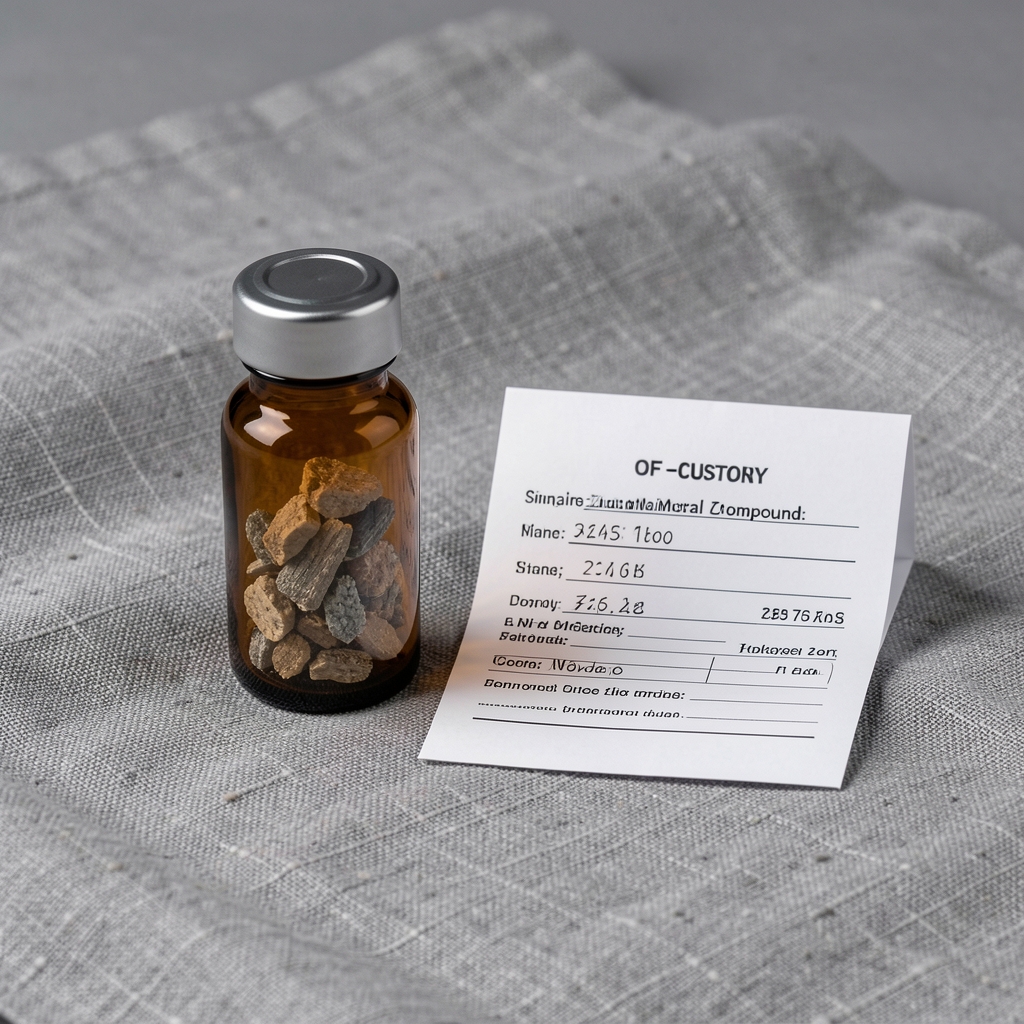
A retained sample from each batch is submitted to a third-party laboratory for independent verification. The laboratory assesses the sample against the batch composition record for key declared ingredients. Results are received as a certificate of analysis, archived under the batch code with a revision number.
Where results diverge from specification beyond permitted tolerance, the batch is quarantined pending investigation. A batch that does not pass independent verification is not released under any circumstances. The verification record forms part of the permanent product archive.
Sourcing Geography
Where Solaniv ingredients originate
The sourcing geography reflects ingredient availability and documentation capacity rather than cost optimisation. Botanical ingredients are sourced preferentially from European suppliers where chain-of-custody documentation meets the internal standard. Specialist mineral sources — where specific elemental composition is required — are procured internationally with the same documentation requirements applied regardless of origin.
Origin maps are maintained in the product archive for each ingredient in current use. Supplier countries at present include Poland, Germany, the Netherlands, India (turmeric and ashwagandha root extracts), Sri Lanka (cinnamon bark), and specified European mineral extraction sites for selenium and chromium compounds.
02
Supplier Standards
What Solaniv requires of its suppliers
A
Documentation Set
Each supplier must provide, for each ingredient lot supplied: a certificate of composition confirming elemental or botanical content per unit weight, a declaration of origin, processing facility documentation confirming food-grade processing conditions, and a lot-specific certificate of analysis from the supplier's own quality review.
Certificate of CompositionOrigin DeclarationLot Certificate
B
Ongoing Audit
Approved suppliers are subject to documentation review at each provision. A supplier whose documentation quality declines across consecutive deliveries is placed under review. The review process assesses whether the decline reflects a systemic change in the supplier's operations or an isolated administrative matter. Systemic decline results in removal from the approved roster.
Per-Delivery ReviewArchive EntryAudit Trail
C
Traceability Record
The traceability record links each batch of finished product to the specific ingredient lots used in its production. In the event of a quality review — whether initiated internally or in response to an external notification — the traceability record allows immediate identification of affected batches and the corresponding supplier lots.
Batch-to-Lot LinkageRecall Readiness
D
New Supplier Onboarding
A new supplier does not enter the approved roster until the full documentation set has been received, reviewed, and archived. The review period is not time-limited. A supplier may submit revised or supplementary documentation at any point during the review. The decision to approve or decline is made solely on documentation quality, not on commercial factors.
Pre-Approval ReviewDocumentation-Led
03
Independent Verification
The third-party laboratory process
Independent batch verification is conducted by a contracted third-party laboratory that has no commercial relationship with Solaniv's ingredient suppliers. The laboratory receives a blinded sample — identified by batch code only — and assesses it against a reference specification derived from the formulation record.
The assessment covers declared ingredient concentrations for the primary active components in each formulation. Results are expressed as a percentage of the declared value and compared against the permitted tolerance range stated in the batch specification. Certificates of analysis are issued under the laboratory's reference and archived by Solaniv under the corresponding batch code.
The independent laboratory relationship is reviewed periodically to ensure that the laboratory's own accreditation and quality systems remain current. Solaniv does not use a laboratory with a direct financial interest in the outcome of its assessments.
04
Labelling Accuracy
What the label says, and how Solaniv confirms it
L-01
Declared Concentrations
All ingredient concentrations stated on the product label correspond to the verified batch composition. Where a nutrient is expressed as a percentage of the EU Nutritional Reference Value, that value reflects the verified per-serving content, not the formulation target.
L-02
Ingredient Naming
Botanical ingredients are identified using accepted common names alongside the scientific binomial. Mineral compounds are identified by their chemical form — for example, zinc bisglycinate rather than the generic term zinc — because bioavailability characteristics vary by compound form and the distinction is compositionally relevant.
L-03
Shelf-Life Basis
The best-before date stated on Solaniv products is derived from stability assessment data for the specific formulation. It is not a generic commercial period applied uniformly across the range. Products that have not undergone stability assessment are not released.
L-04
Regulatory Classification
Solaniv products are nutritional food-supplements registered with the applicable local regulatory authority under food-supplement classification. Products meet compositional and labelling requirements for nutritional supplement categories.
L-05
Allergen Disclosure
Allergen information is reviewed at formulation stage and updated if the supplier roster or production facility changes. Cross-contamination risks are assessed at the production facility level and disclosed accurately on the label. No allergen disclosure is deferred to a later production run.
L-06
Archive & Revision
Each version of a product label is archived under a revision number. Label changes — whether arising from a reformulation, a regulatory update, or a supplier change — are documented in the label revision record alongside the effective date and the nature of the change.
05
Common Questions
Questions about the standards
The laboratory is selected based on its accreditation status, its scope of accreditation relevant to food-supplement compositional analysis, and the absence of any direct commercial relationship with Solaniv's ingredient supplier roster. The relationship is reviewed periodically and the laboratory may be changed if these criteria are no longer met.
A batch that does not pass independent verification is quarantined and not released. An investigation is opened to identify the root cause — whether at the ingredient, production, or formulation stage. The investigation outcome is documented and the corrective action is implemented before the next batch of that formulation is produced.
Certificates of analysis are maintained in the internal product archive and are available to regulatory authorities upon request. Solaniv provides a summary of batch verification outcomes on request via the contact address. Full laboratory certificates are not published in their complete form, as they contain supplier-specific information that is regarded as confidential.
Production is contracted to a specialist facility operating under food-grade processing conditions. Solaniv retains editorial control over formulation decisions, sourcing standards, and verification requirements. The contracted facility is subject to the same documentation expectations as ingredient suppliers and is reviewed on an ongoing basis.
Ingredient concentrations are set with reference to EU Nutritional Reference Values where applicable, and published compositional research where NRVs do not exist. Concentrations are not inflated beyond the compositionally rational range for label-marketing purposes. The formulation record documents the rationale for each concentration decision.
Enquiries about specific batches can be directed to the contact address below. Batch codes are printed on the product packaging. Please include the batch code in any enquiry so the relevant archive record can be retrieved.
Regulatory Note
Solaniv products are nutritional food-supplements registered with the applicable local regulatory authority under food-supplement classification. Products meet compositional and labelling requirements for nutritional supplement categories.
Ingredient profiles in Solaniv supplements are selected based on published nutritional research and undergo independent batch verification for quality and labelling accuracy. We recommend speaking with a qualified wellness or nutrition professional before introducing any supplement to your daily routine, particularly if you have specific dietary requirements.
We use cookies to understand how our site is used and to improve your experience. Learn more